Seamless underwear: what actually makes it invisible
"Seamless" is one of the least regulated words in underwear. It gets applied to garments with stitched hems, elasticated waistbands and lace trims — none of which are invisible under anything close-fitting. This is what the word should mean, and how to tell the difference before you buy.
Written by Sarah Stoute, couture bridal designer — 400+ gowns fitted and altered a year in Christchurch.
The hem is the problem
Pick up almost any pair of underwear described as seamless and look closely at the leg opening. In most cases the fabric has been folded over and stitched, or bound with a strip of elastic. That fold is two or three layers thick where the rest of the garment is one, and under a close-fitting fabric it is precisely the ridge you were trying to avoid.
The garment may well be genuinely seamless through the body — knitted as a tube with no side seams — and still show a line, because the line was never coming from the side seams. It was coming from the edge.
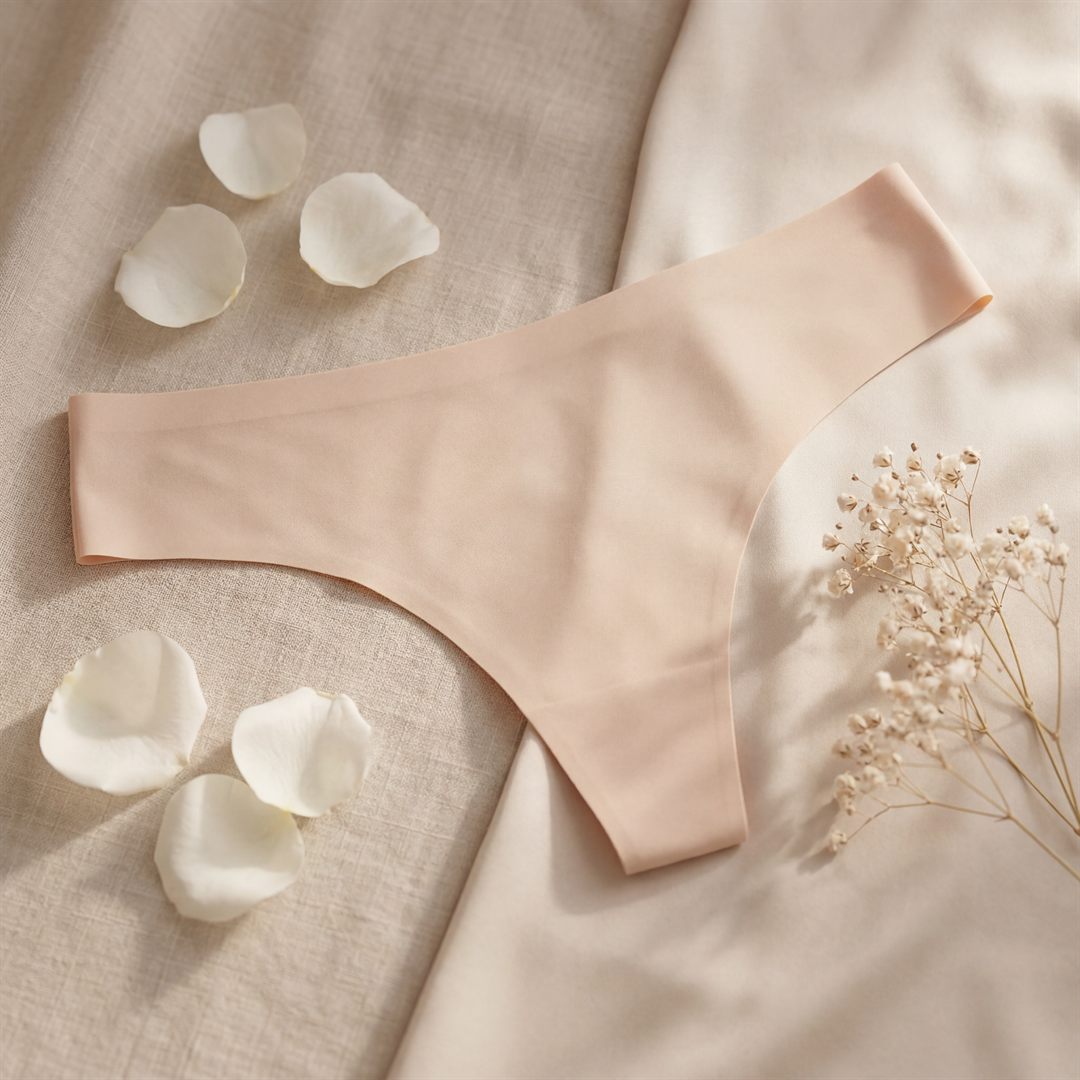
A laser-cut edge is made differently. The fabric is cut with a heated blade that seals the fibres as it goes, so the edge is finished without being folded. Nothing is added. The garment is one thickness from the waist to the leg opening, and when it stops, it simply stops.
The test takes two seconds in a shop or at home: run a thumb and finger around the leg opening. If you can feel a ridge, it will show.
What else gives underwear away
The edge is the main offender, but it is not the only one. Anything added to the surface of a brief is thicker than the brief itself, and under a fine fabric thickness is what registers.
Lace and embroidery are the worst of it — the pattern telegraphs through crepe and chiffon as a texture rather than as a garment. Elasticated or contrast waistbands create a second horizontal line at the top to match the one at the leg. Hook-and-eye hardware, decorative rings and bows all press through.
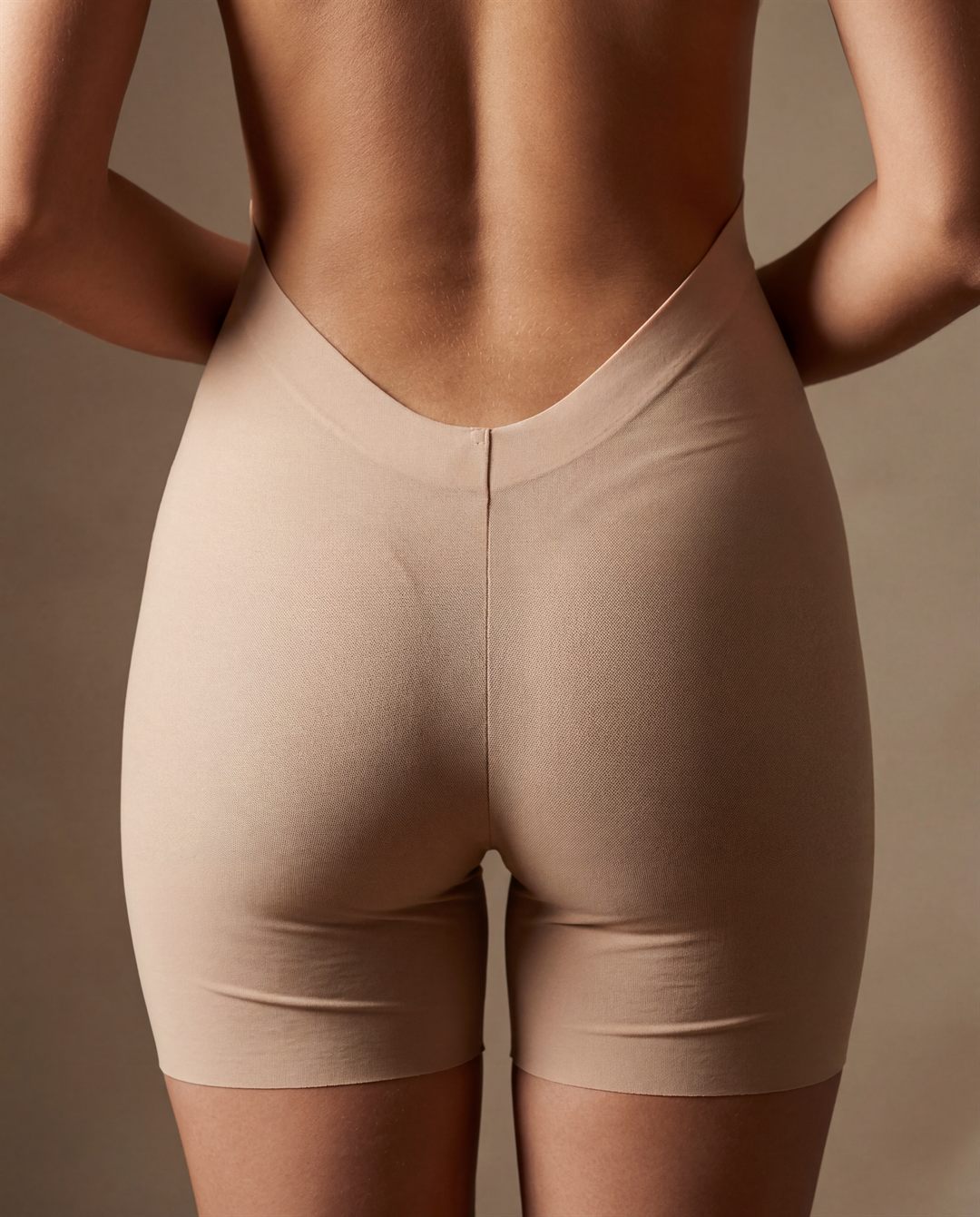
Plain, single-thickness microfibre with nothing applied to it is what actually disappears. It is a less interesting garment to look at, which is precisely the point.
Seamless is not the same as shaping
These two get conflated constantly, and buying the wrong one is a common source of disappointment.
A seamless brief creates a clean surface. It has little or no compression, adds no thickness, and its job is to be undetectable. It will not hold your stomach, and it is not trying to.
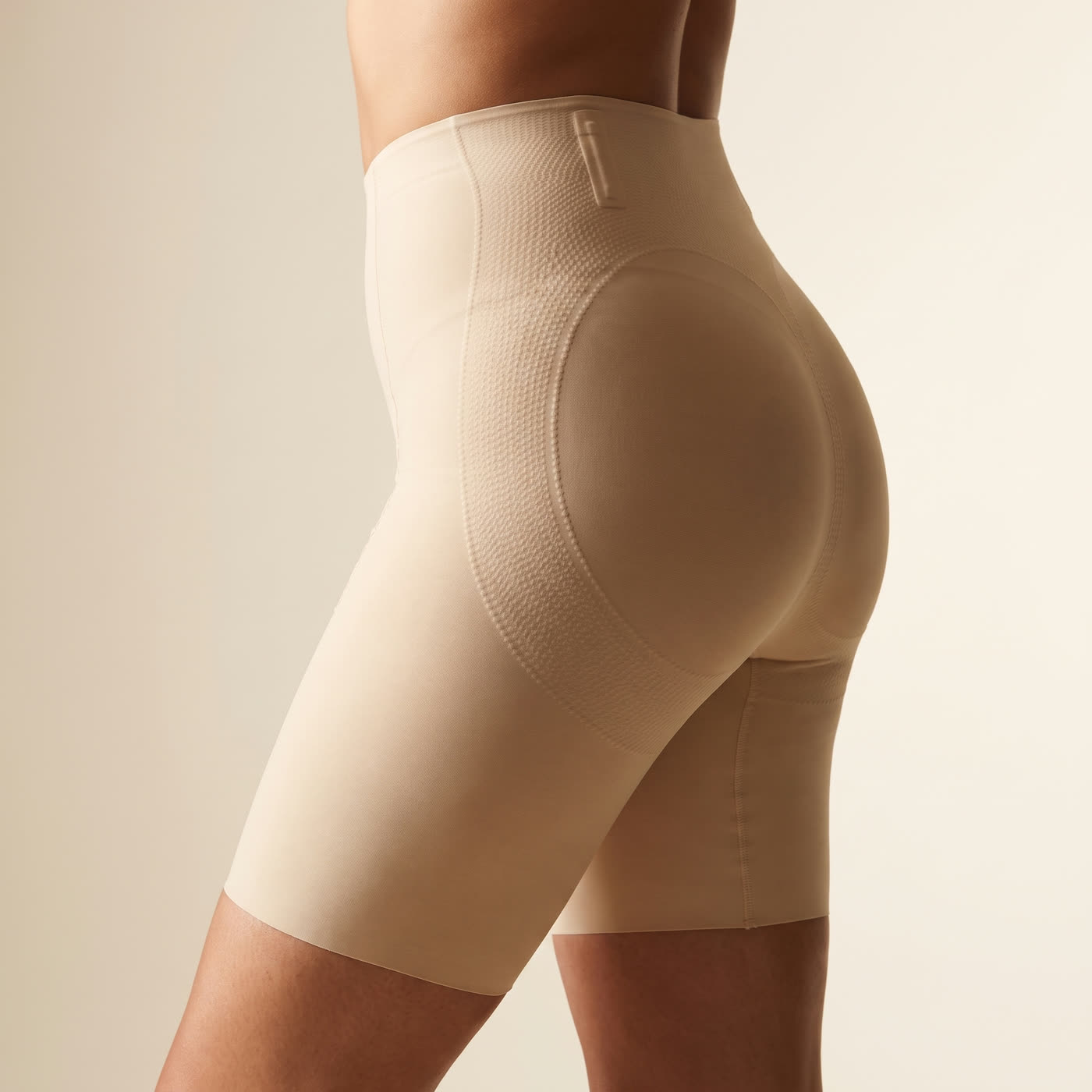
Shaping garments apply real compression across the waist, stomach and hips. They will change your silhouette, and they are correspondingly more substantial.
Decide which job you actually need done before you buy, and choose the garment for that job. A brief bought in the hope that it will also hold the stomach will disappoint on both counts.
What disappears under which fabric
Not every fabric demands the same discipline. This is roughly how much you have to care, from most to least.
| Fabric | How forgiving | What you need |
|---|---|---|
| Bias-cut silk satin | Not at all | Laser-cut edge and nothing applied to it — or adhesive only |
| Crepe and georgette | Very little | Laser-cut seamless, no waistband, no lace |
| Fine jersey and knitwear | Little | Laser-cut seamless; a hemmed edge will show |
| Chiffon and organza | Moderate, but shadows through | Plain nude briefs; keep the under-layer minimal |
| Heavy satin, brocade, denim | Very | Almost anything works |
Under a wedding dress specifically
Bridal is where all of the above stops being a preference and becomes a requirement, which is why our briefs were drafted for it. Wedding fabrics skew toward exactly the unforgiving end of the scale — bias-cut silk satin, single-ply crepe, silk georgette — and every one of them is photographed at close range all day.
Two additional rules apply. Avoid lace, embroidery and any hook-and-eye hardware entirely; all three telegraph through delicate fabric far more readily than plain microfibre. And wear the actual underwear to your final fitting, not an approximation of it, because the dress will be pinned to the silhouette you present on the day.
The same applies to dress shopping. Turning up to try gowns in the underwear you intend to wear gives you an accurate read on how each dress will actually sit.
Two briefs, one difference
We make two seamless briefs. The fabric, fit, sizing and cotton-lined gusset are identical across both; the only difference is the shape of the laser-cut border.
The Seamless Panties have a straight raw cut — the flattest possible finish, and the one we recommend under the most transparent fabrics.
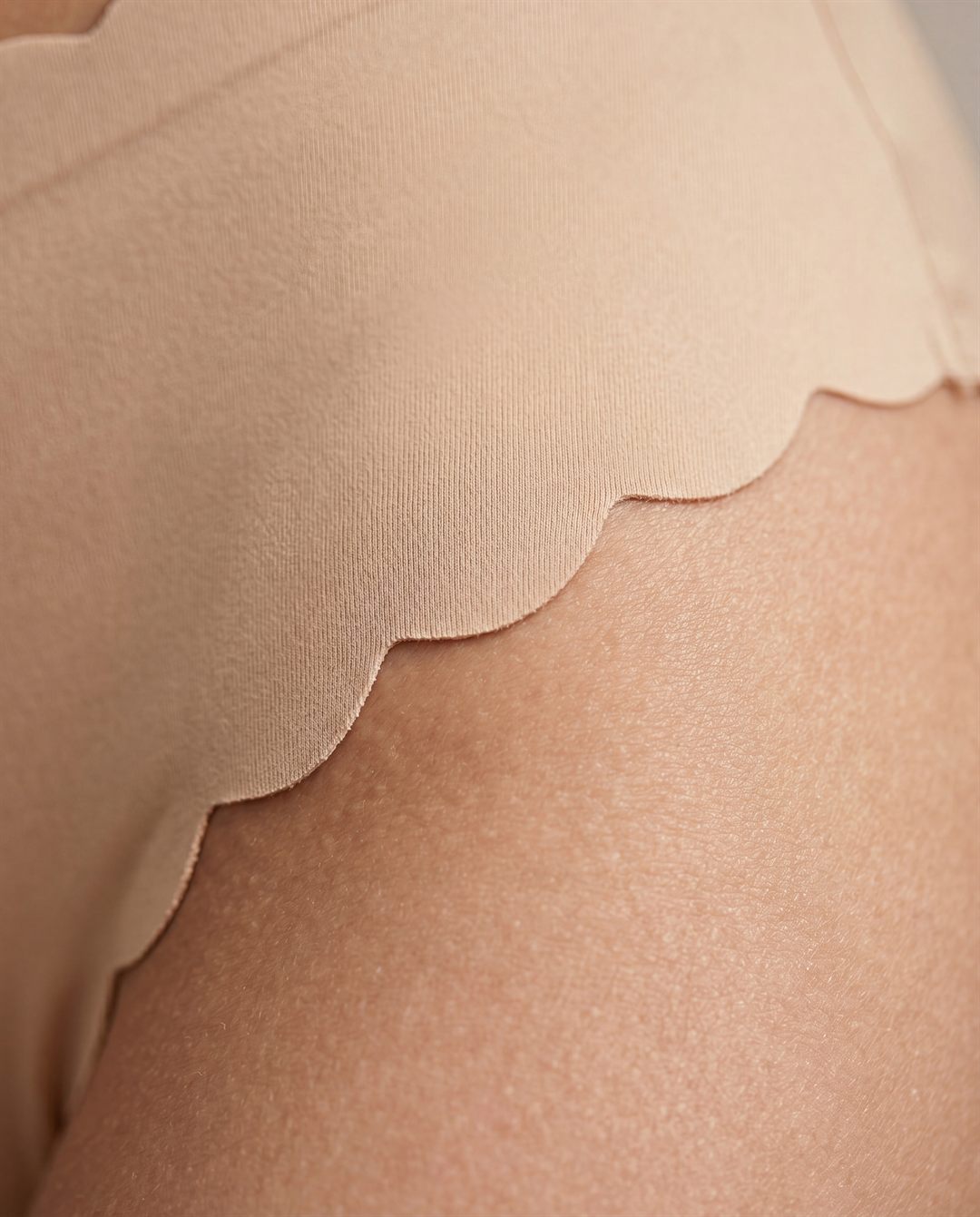
The Seamless Scallop Panties use the same laser cutting to produce a soft scalloped border. It lies just as flat, and looks like lingerie rather than like equipment, which matters more than it sounds when a good deal of a wedding morning is photographed before the dress goes on.
Both mix freely in the Panty Trio (any three pairs for $60) and the Bridesmaids Bundle (any five for $90), with styles and sizes chosen per pair.
Making them last
Seamless underwear lives or dies on its elastane, and elastane is destroyed by heat. Hand wash in cold water with a gentle detergent, and lay flat to dry out of direct sun. No tumble drying, no ironing, no bleach.
Treated that way the laser-cut edge keeps lying flat for a long time. Run them through a hot machine wash and a dryer a few times and the edge begins to curl — at which point the thing that made them invisible is gone.