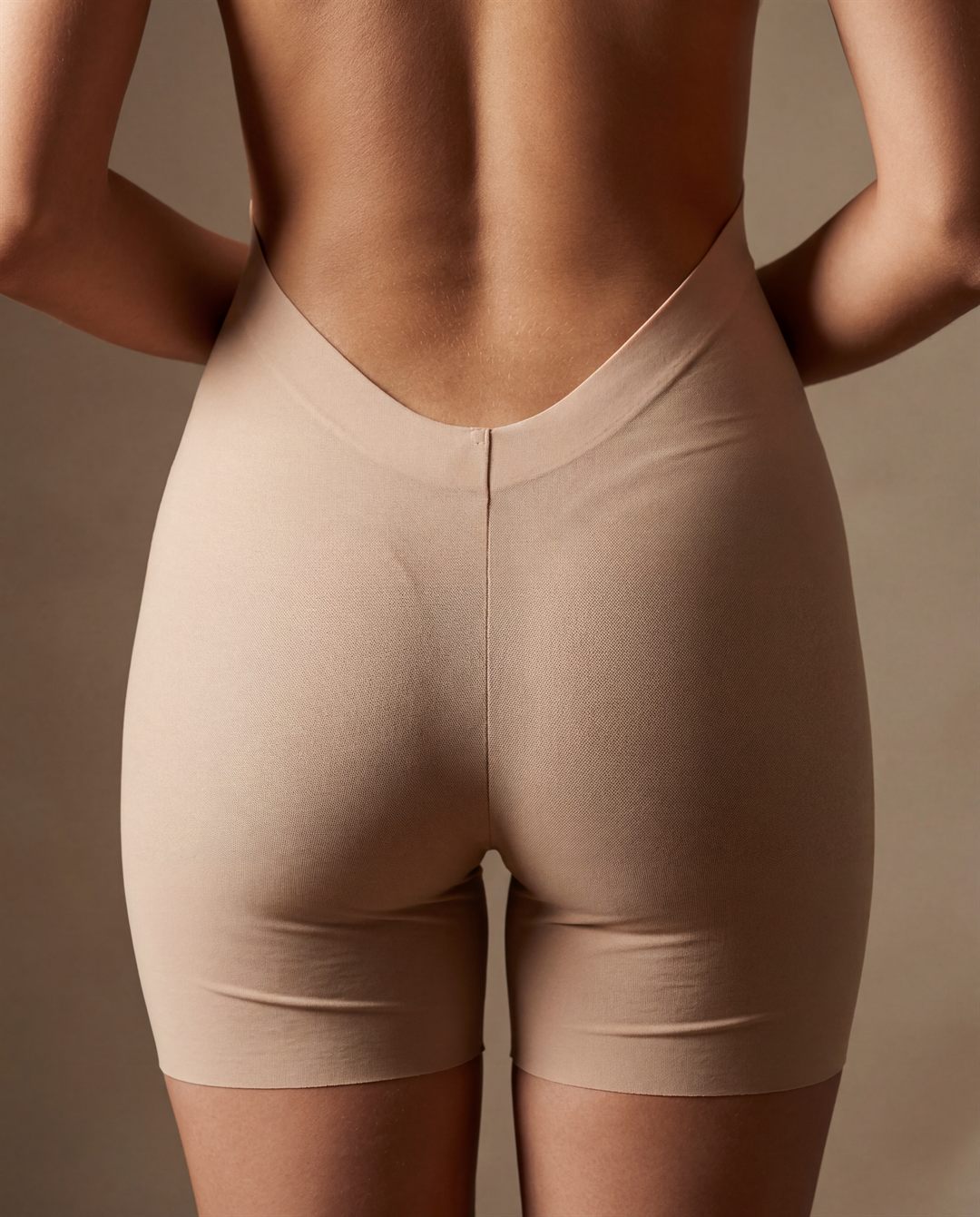
Tummy control shapewear: what actually works
"Extreme tummy control" is the most searched-for and least useful idea in shapewear. The firmest garment in the shop is rarely the one that produces the smoothest line — and understanding why makes choosing considerably easier.
Written by Sarah Stoute, couture bridal designer — 400+ gowns fitted and altered a year in Christchurch.
Why firmer is not better
The intuition behind extreme control is that more pressure equals a flatter result. It does not, and the reason is simple physics: the body is not compressible in the way the marketing implies. Applying pressure to the stomach displaces that volume rather than removing it, and it emerges at whichever edge of the garment offers least resistance — as a roll above the waistband, or a bulge below the hem.
This is why an aggressively firm garment in the wrong size can look markedly worse than no shapewear at all. It has created two hard edges where previously there was a continuous line, and edges are far more noticeable than volume.
The variable that actually determines the result is coverage area. A garment holding moderately from the ribcage to the mid-thigh gives the smooth, uninterrupted line people are looking for, because there is no edge within the fitted zone for anything to escape at. A short, firm garment covering only the stomach has two.
Where the waistband should sit
High-waisted means above the softest part of the stomach, sitting against the ribcage. This is not an aesthetic preference — it is the mechanism. A waistband positioned on the stomach compresses in the middle of the area it is meant to smooth and pushes volume both up and down. A waistband positioned above it holds from a firm anchor point and lets the panel do the work below.
If a garment's waistband keeps ending up on your stomach rather than above it, the garment is either too short in the body for you or too small. Both are fixable by changing the garment; neither is fixable by pulling it up more often.
Sizing: the mistake almost everyone makes
Our sizing follows regular NZ sizing — S, M, L and XL. Size on your natural waist measurement, taken at the narrowest point over bare skin without pulling the tape tight.
If you fall between two sizes, let the dress decide. Size up if you do not want any bulging or pulling showing through the fabric; size down if you want cinch and structure under a firmer bodice.
What does not work is going smaller still in pursuit of extreme control. Past that point you get more displacement, more rolling, more discomfort and a worse line — every single consequence is negative. The extra compression is not doing what the marketing says it is doing.
| Size | Waist (in) | Hips (in) |
|---|---|---|
| S | 25 – 28 | 37 – 39 |
| M | 28 – 31 | 39 – 42 |
| L | 31 – 34 | 42 – 44 |
| XL | 34 – 38 | 44 – 48 |
The thigh line
Tummy control garments extending down the thigh solve one problem and can create another. A thin, elasticated leg opening produces a visible horizontal ridge across the thigh — under fitted satin or crepe this is as obvious as the stomach line you were trying to fix.
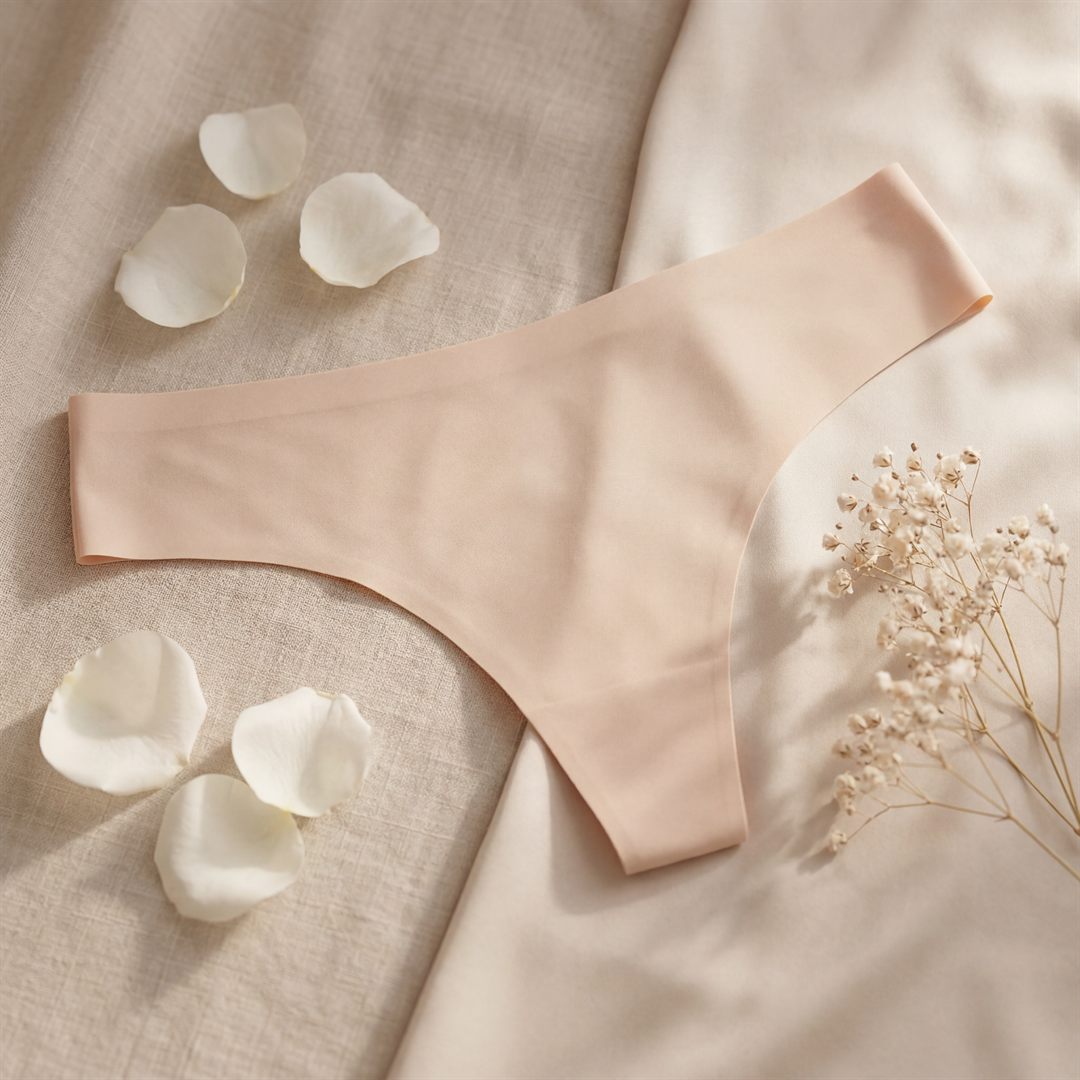
There are two honest answers, and which one you want depends on the dress. Under a clingy, fitted skirt the answer is a laser-cut raw edge — cut and heat-sealed rather than folded and stitched, so the garment ends without adding thickness. That is how our seamless briefs are finished.
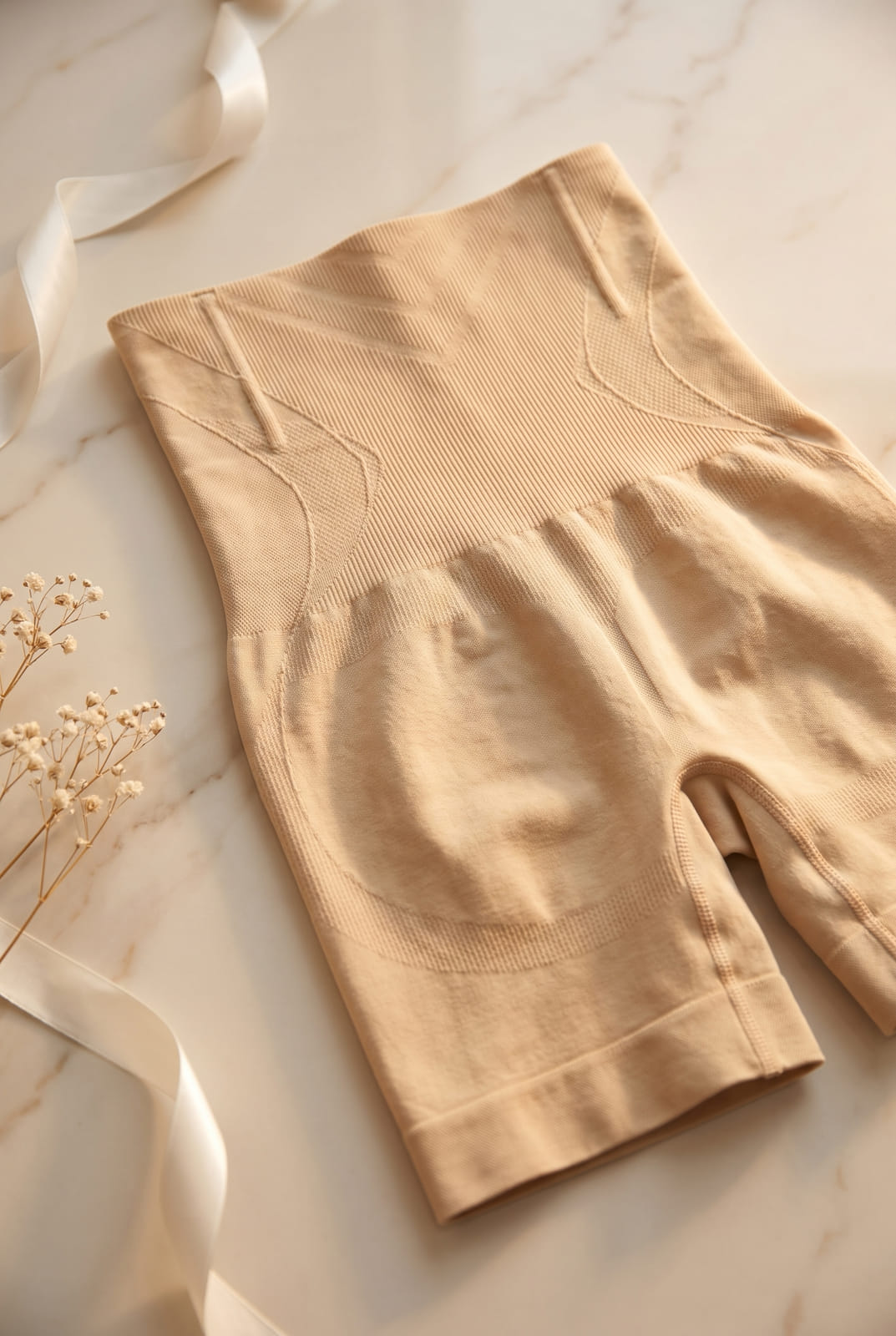
Under a skirt that goes out from the waist, a thick leg band is the better answer, and we chose it on purpose. On a garment shaping as firmly as a pair of shaping shorts, a laser-cut edge can work itself loose and roll up the leg over a long day. A deep band grips the thigh instead and holds the shorts in shape from the ceremony to the last dance.
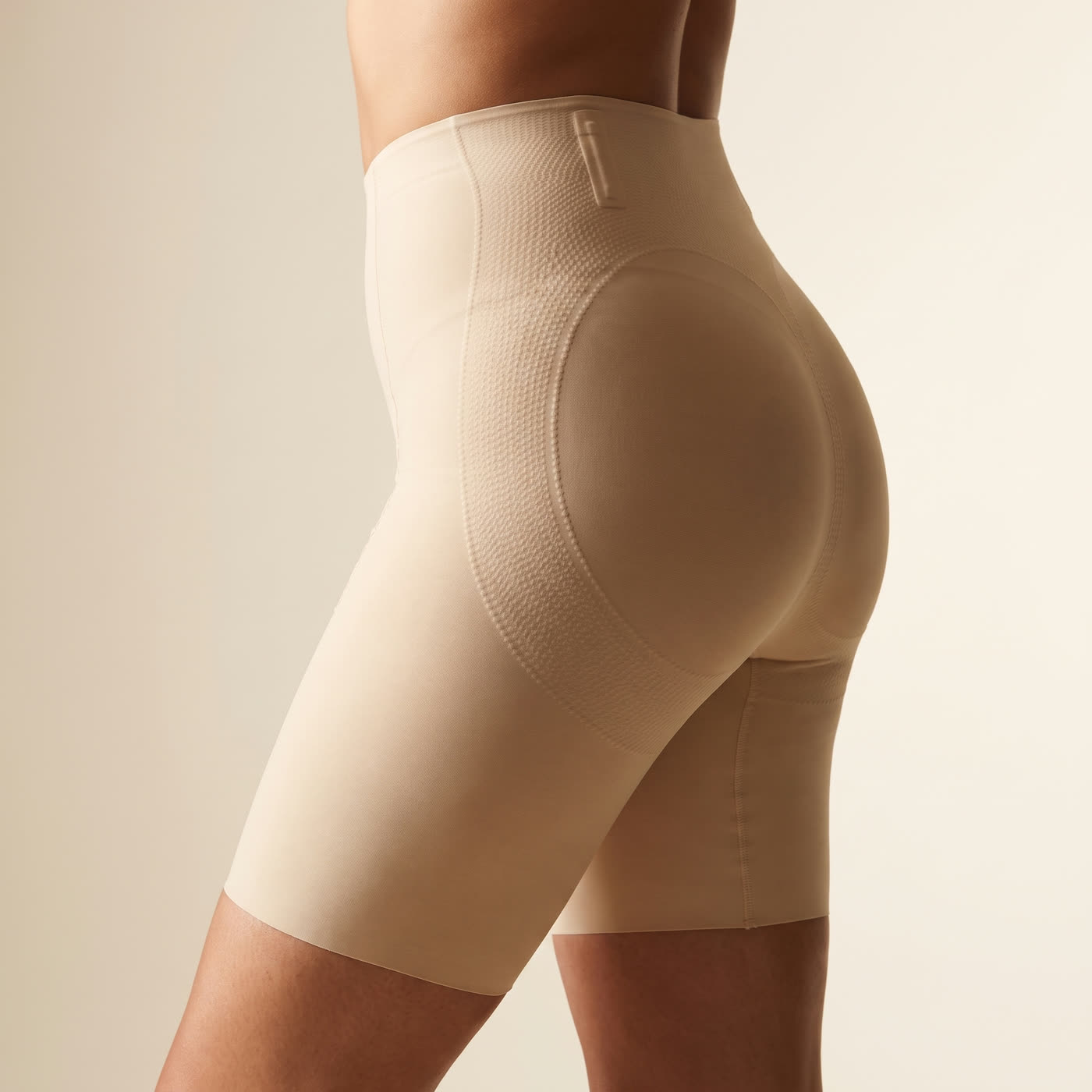
The cost of that choice is that the band has to be covered. The High Waist Shapewear Short is built for a ballgown or an A-line — anything that flares from the waist, so the skirt hides the leg entirely while you keep the full cinch at the waist. It is not the piece for a sheath, a column or a mermaid; under those, the Seamless Waist Shapewear Short, which is seamless at both the waist and the leg opening, or a laser-cut brief is the right call.
Wearing it all day
Shapewear that gets removed at eight in the evening has not done its job. Comfort over long wear comes down to three things: correct sizing, continuous lightweight zoning rather than rigid panels, and anchoring that removes the need for constant adjustment.
Silicone grip strips and boning at the top hem are what stop a garment travelling downward over a day of movement. Without them a waistband relies purely on tension, which means it must be tight enough to grip — and something tight enough to grip on tension alone is generally too tight to wear for twelve hours.
Breathability matters more than it is given credit for. A garment that traps heat becomes uncomfortable long before it becomes visibly problematic, particularly at an indoor summer wedding.
The piece drafted for this problem
Our High Waist Shapewear Short is the piece drafted for this problem: high-density 360-degree control from the ribcage to the mid-thigh. This piece has boning at the waist, woven seamless panels and a thick turned-over leg hem to allow for anchoring the whole night. The different woven panels around the waist and seat allow for things to be shaped and not compressed, leaving you with a flat stomach and a good shaped butt.
It was designed in a bridal atelier against Mikado, duchess satin and other structured fabrics, in live fittings. Firm enough to read through a fitted bodice, cut so that the seat is lifted and shaped rather than flattened — because in several hundred fittings a year, essentially nobody asks to be compressed into a straight line.