Bridal shapewear: what to wear under every wedding dress
The question is almost never "what shapewear should I buy". It is "what goes under this dress" — and the answer changes completely depending on the silhouette, the fabric and the back. This is the pairing guide we work from in the fitting room, organised the way the decision actually gets made.
Written by Sarah Stoute, couture bridal designer — 400+ gowns fitted and altered a year in Christchurch.
Start with the dress
Bridal dressmaking works to millimetres. A gown's fit, drape and hang all depend on the structural layer underneath it, which is why the foundation decision should be made early and then held constant through fittings — not chosen the week before.
Standard high-street shapewear fails under bridal fabric for three specific reasons: bulky seams that press through silk and crepe, no anchoring so waistbands roll, and heavy compression that becomes unbearable across a twelve-hour day. All three are visible from the outside by the reception.
The sections below are organised by silhouette, because that is the order the decision actually happens in.
Mermaid and trumpet gowns
Fitted through the chest, waist and hips, flaring at or below the mid-thigh — usually in heavy crepe, thick lace overlay or structured satin.
Because the shape is close to the body all the way down to the thigh, any horizontal line will register: a standard panty border, a low-rise shaper hem, an elasticated leg. What you need is smoothing that either extends well past the fitted zone or stops with no edge at all.
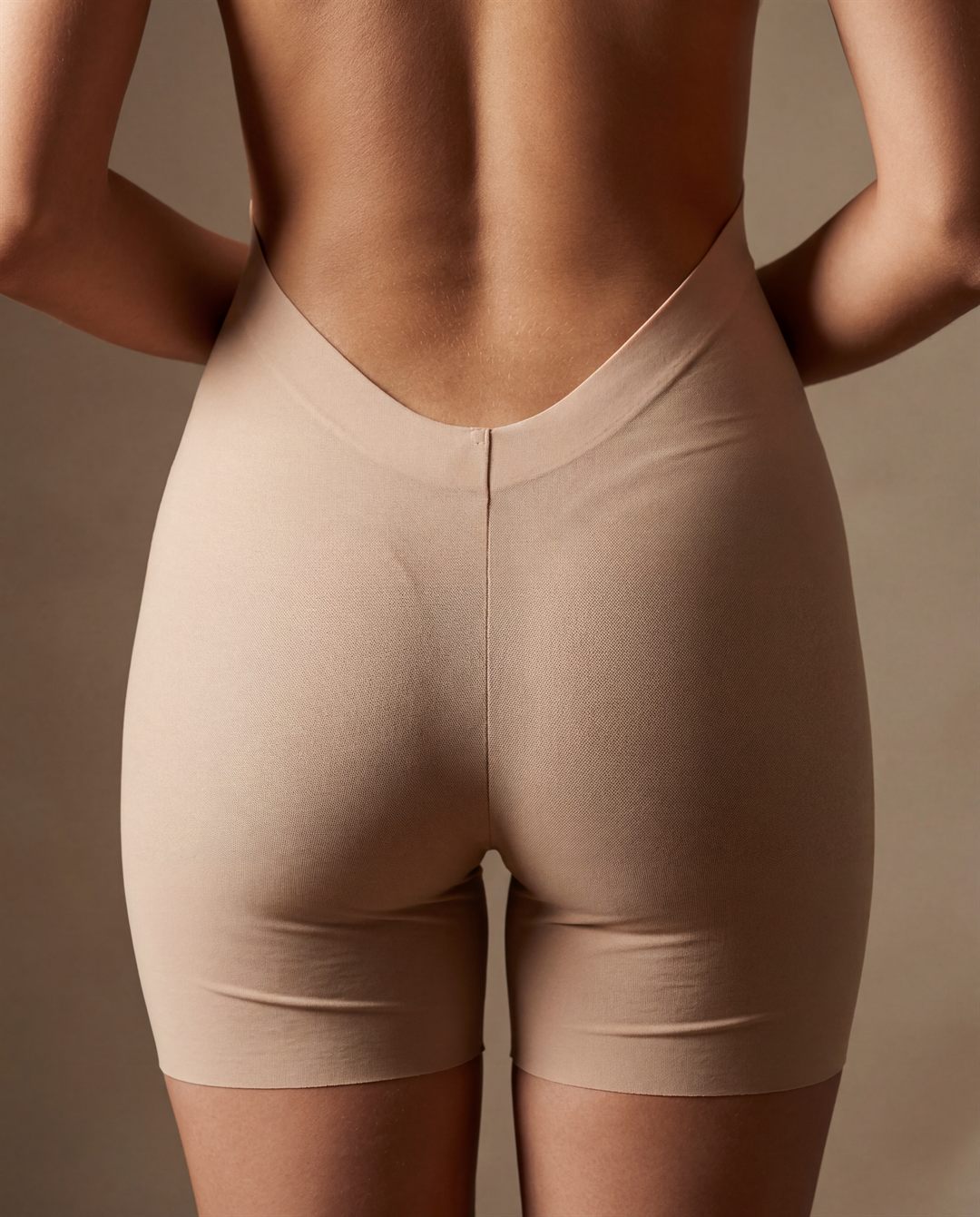
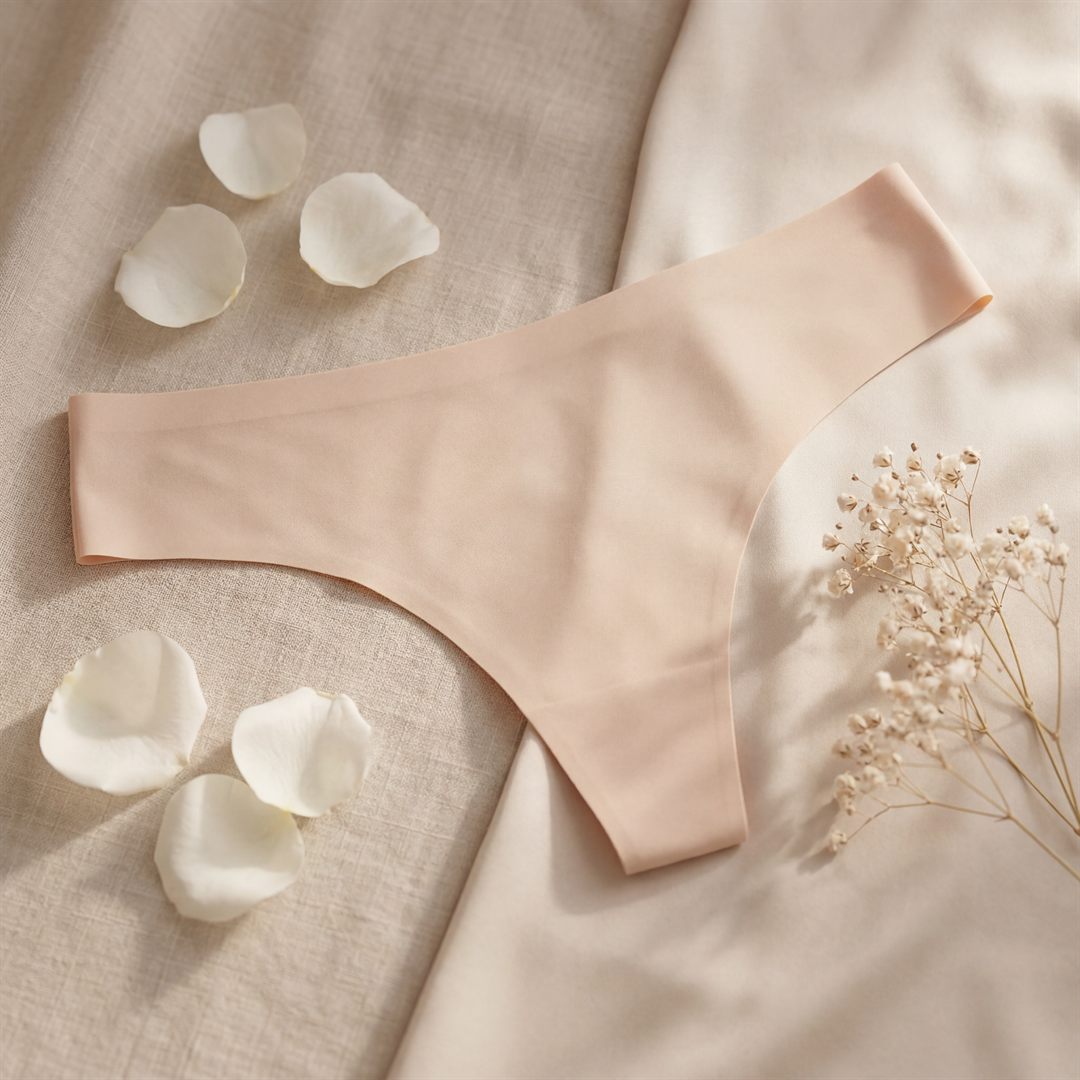
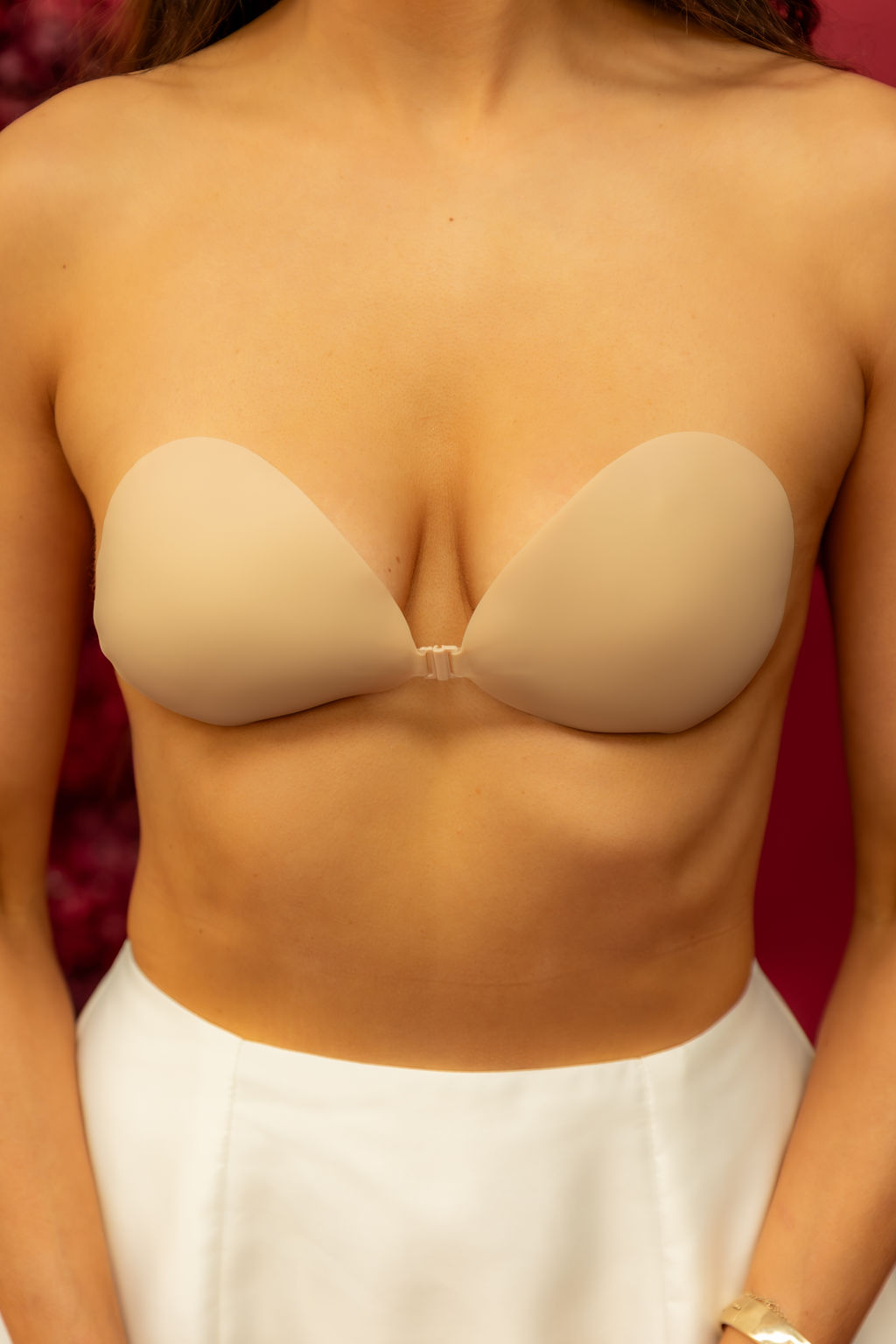
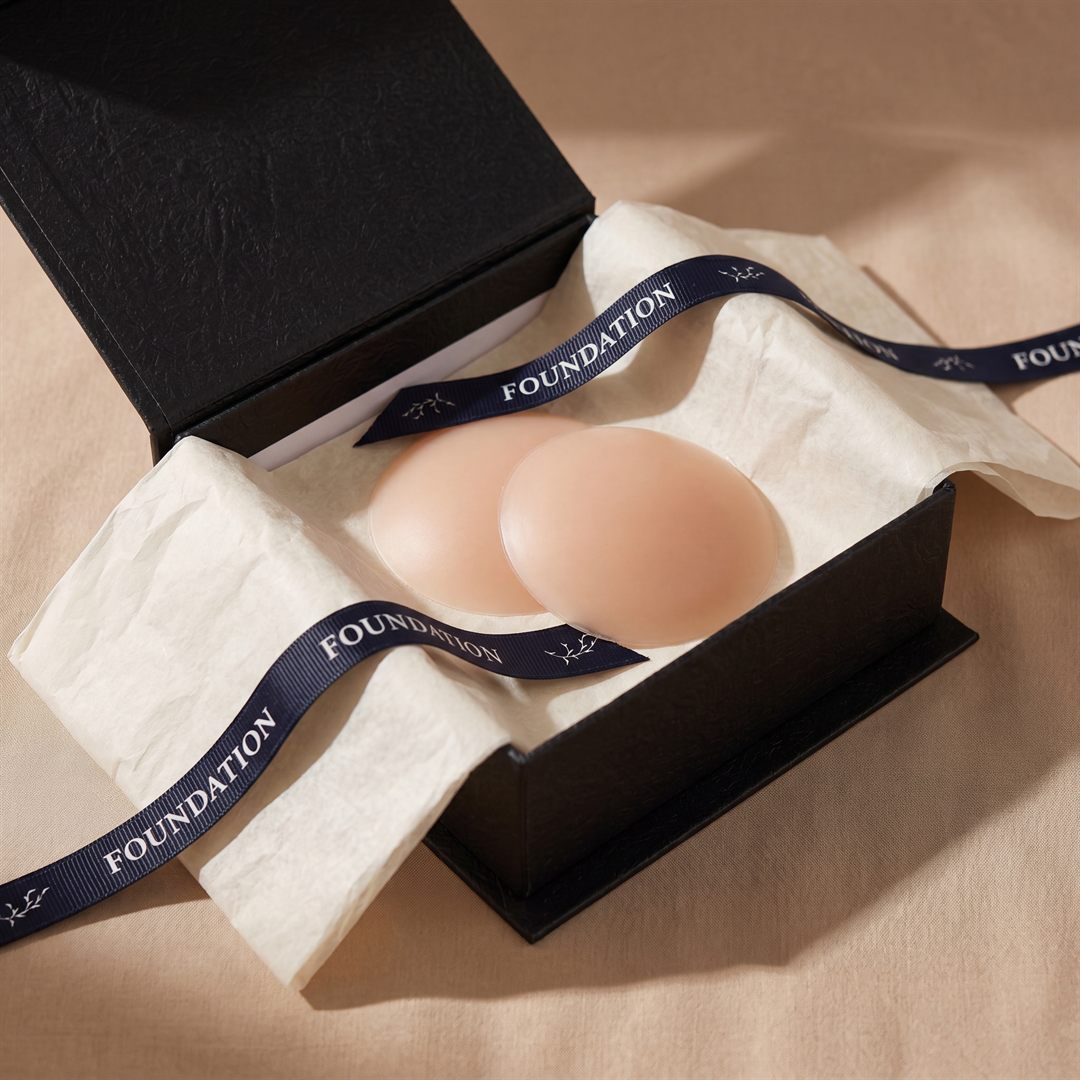
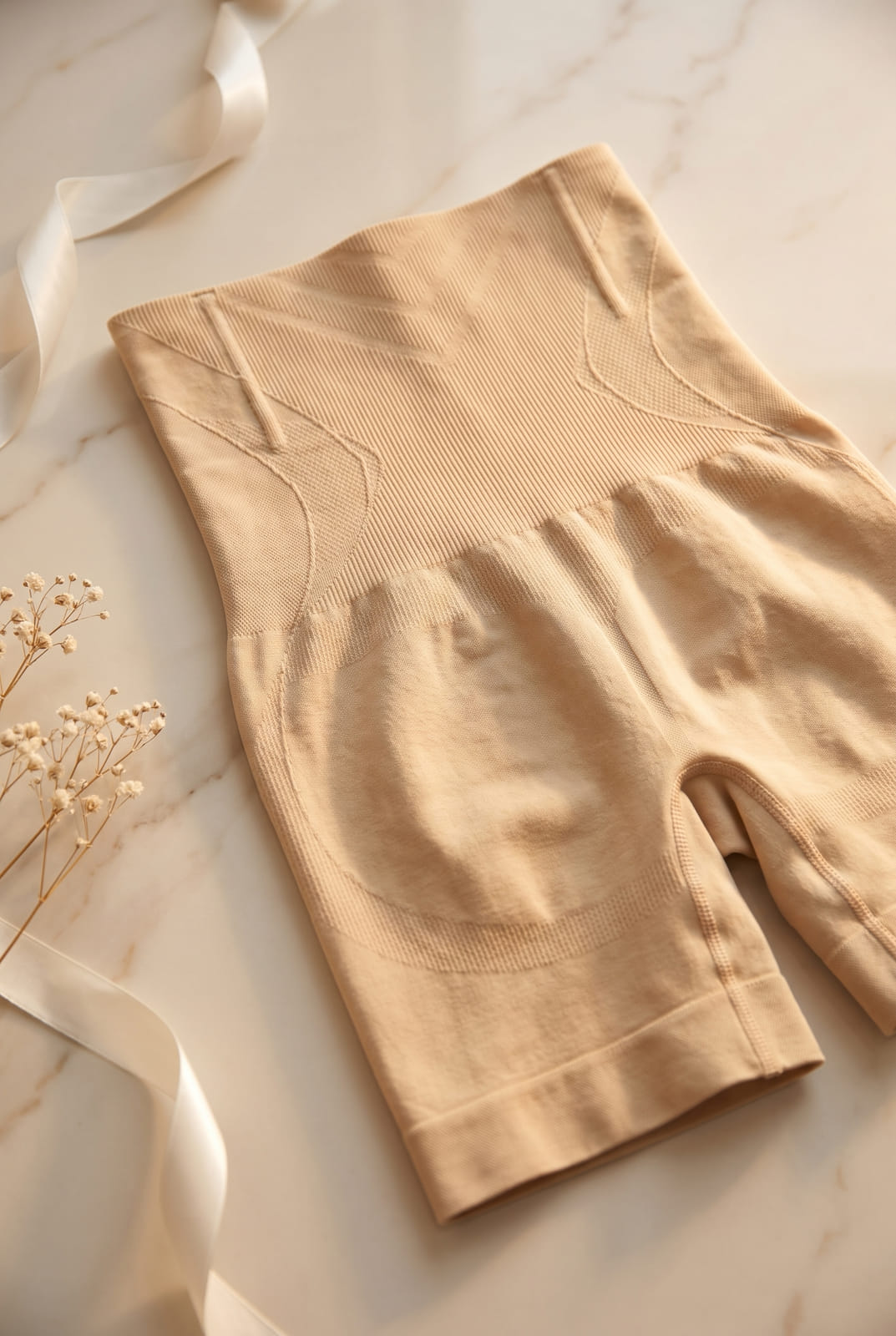
Wear: a low back shapewear short with a laser-cut thigh, or either of the seamless panties. Note that the shapewear has boning at the sides to allow the waist to stay up. Add an adhesive bra for a strapless bodice.
Sheath and column gowns
A narrow and shape-free design that is made to follow drape, with minimal shape from the waist to the floor. This is known as the higher-risk category, as these dresses are often cut on the bias or in clingy fabrics.
Under this fabric and cut, very thin shapewear is required. The objective is feather-light smoothing with a seamless hip-to-thigh transition and absolutely zero seam protrusion.
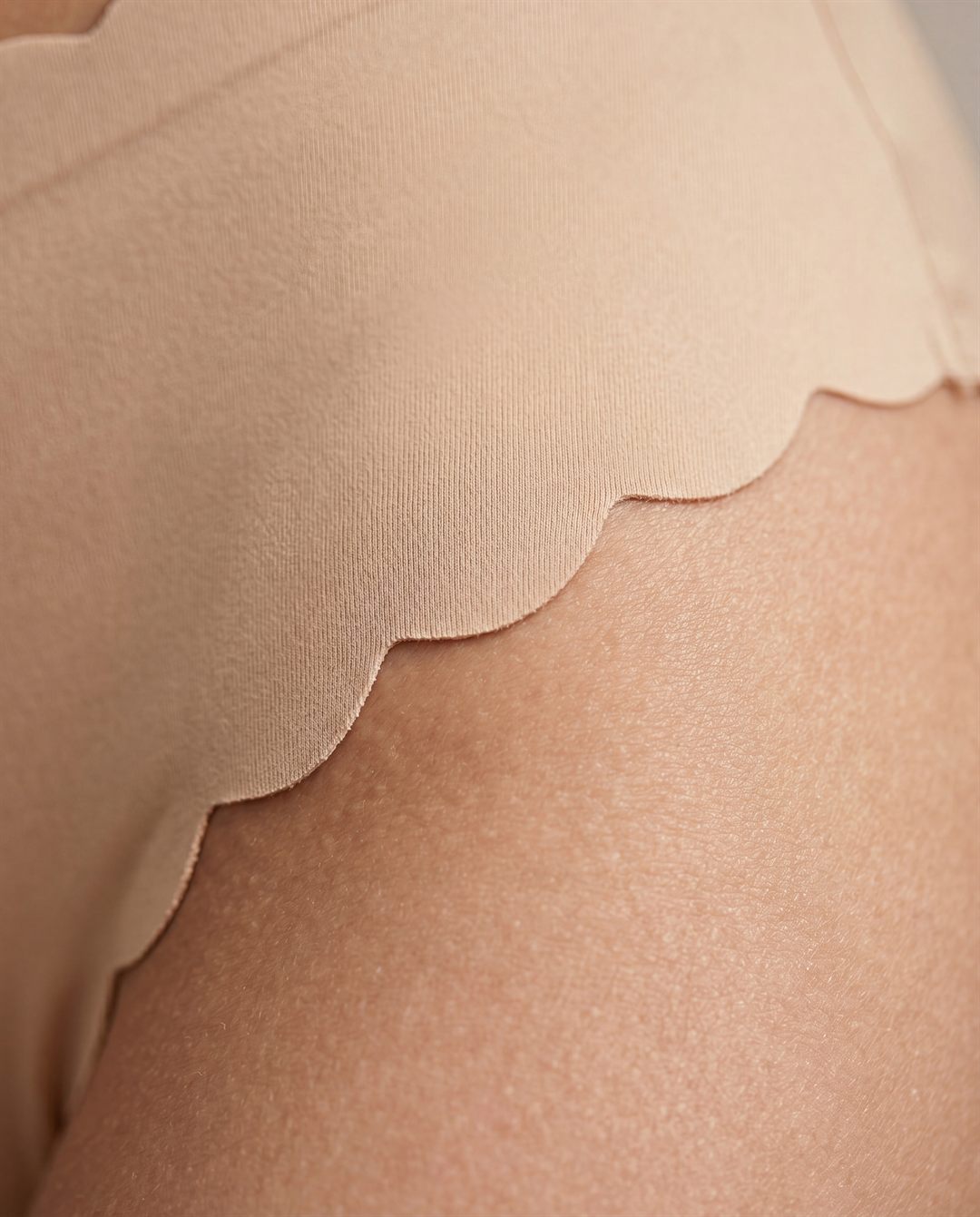
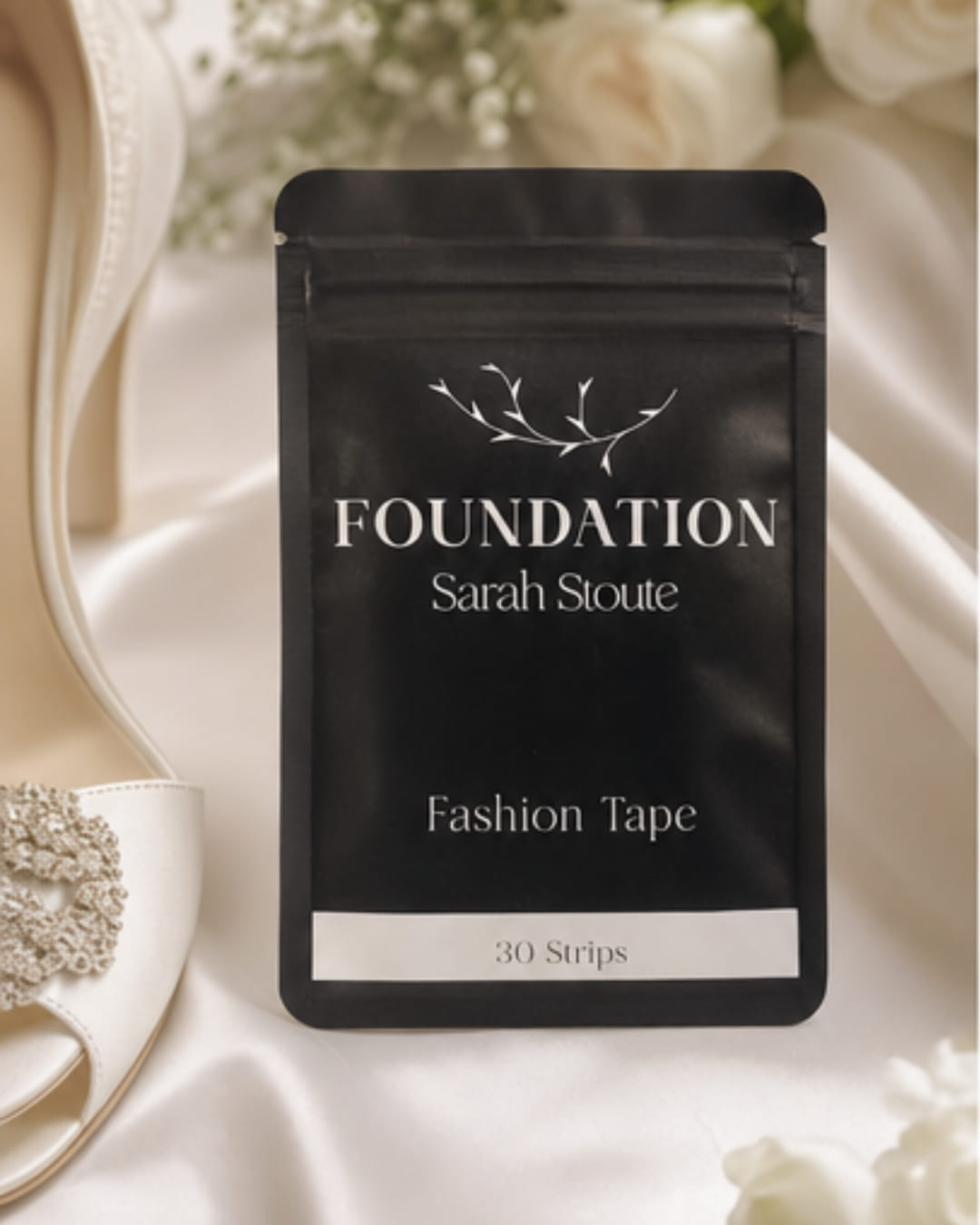
Wear: as little as possible, executed perfectly — a raw-cut seamless brief or the Seamless Scallop Panties, nipple covers, and fashion tape. No compression bands, no elastic binding, no lace, no embroidery, no hook-and-eye hardware. Anything with structure will telegraph.
Ballgown and princess silhouettes
A structured bodice cinched at the natural waist opening into a voluminous skirt of tulle, organza or heavy satin. The bodice carries the entire weight of that skirt, which changes the problem completely.
If the natural waist is not properly supported, the dress pulls downward all day — causing constant slipping and, in strapless styles, constant readjustment at the chest. The foundation's job here is partly structural: anchor the dress at the waist so the skirt's weight transfers from the bust to the pelvis.
The skirt is voluminous enough to hide almost any underwear line, so lower-body invisibility is not the concern. Comfort is. Brides in heavy crinoline and tulle chafe, and a soft mid-thigh seamless short is worth having for that reason alone.
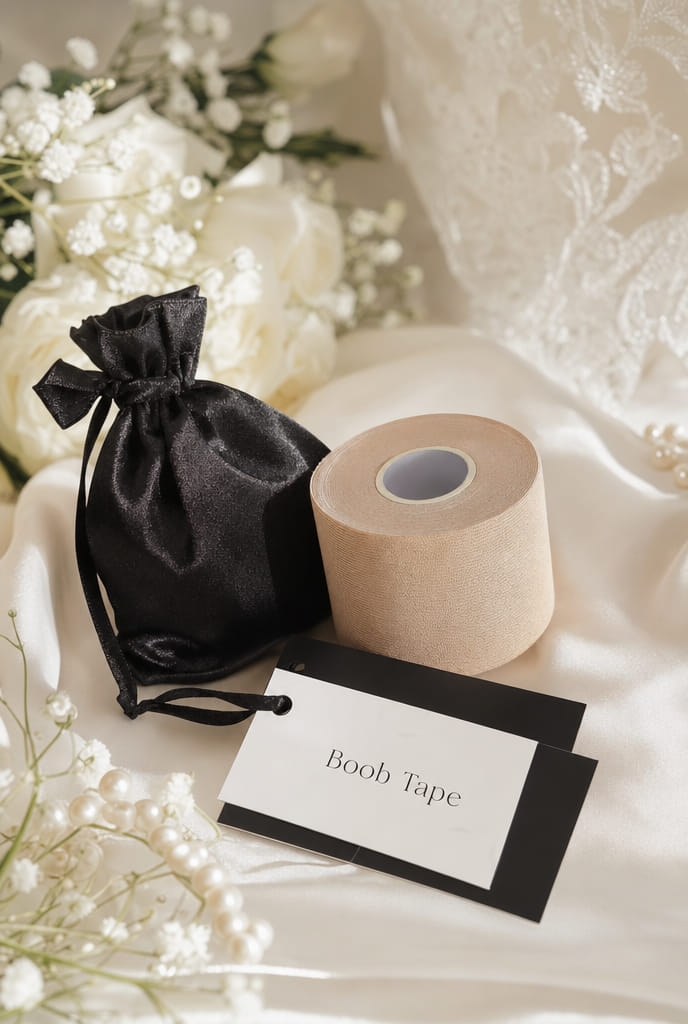
Wear: firm waist cinching with bust lift from tape and adhesive cups. Prioritise anchoring and anti-friction over invisibility.
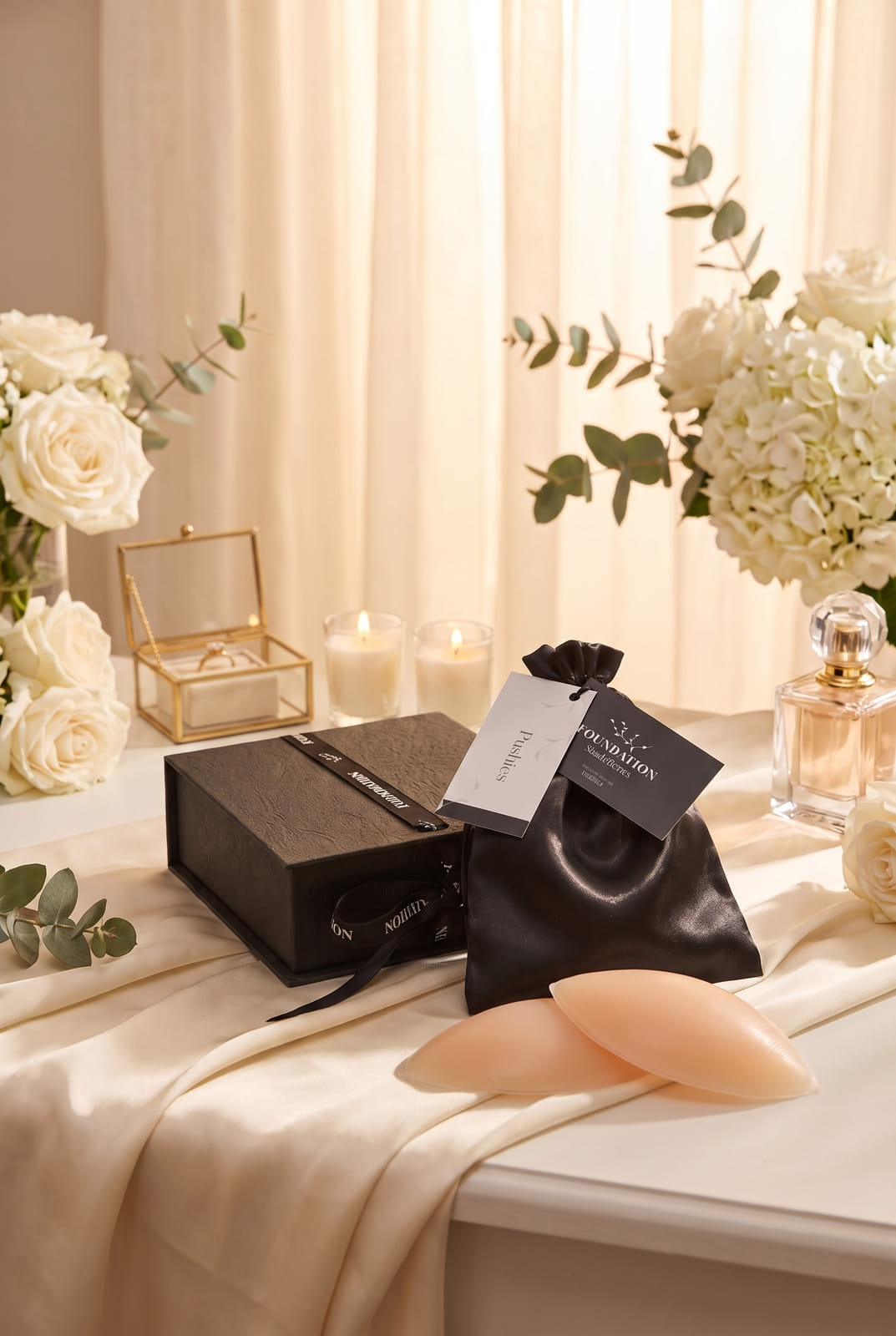
A-line gowns
A fitted bodice through the bust and waist cascading outward from the waist — lace, chiffon, silk taffeta or soft tulle. The most forgiving of the silhouettes, and the most versatile.
Under-skirt friction is much reduced compared with a ballgown, but moderate abdominal control still matters: the waistline needs to stay clearly defined at the point where the dress begins to flare, or the transition softens and the silhouette loses its shape.
Wear: continuous waist contouring with soft hip smoothing, plus dependable bust shape. A seamless brief with shaping over it, and tape or cups depending on the neckline.
Slip and low-back gowns
Fluid bias-cut silk or satin, thin straps, plunging neckline, and a back that opens dramatically to the lumbar. This is the hardest category to solve and the one we are asked about most.
Two things are working against you at once. Bias-cut silk satin hugs every curve and shows every ridge, so almost nothing conventional can be worn under it. And the back is open far too low for a bra band or a standard bodysuit — both will sit above the dress's back line and be plainly visible.
Wear: shapewear cut specifically low at the back, so the exposed back stays clean while the stomach and hips are still smoothed, paired with adhesive lift tape for the bust. That combination is the Backless Bride Kit. If the dress is completely backless and sheer, bypass conventional underwear altogether — medical-grade lift tape and adhesive cups with a raw-cut brief or thong.
Fabric rules
Silhouette decides the garment; fabric decides how careful you have to be. This is the reference table we use.
| Fabric | Transparency risk | What to wear underneath |
|---|---|---|
| Silk satin, bias-cut | Extreme — shows every ridge and crease | Ultra-thin seamless skins, or medical-grade adhesive tape only |
| Crepe, silk or poly | High — telegraphs texture and seams | Raw-edge microfibre, completely seamless, no hardware |
| Chiffon and organza | Medium — under-layers shadow through | Plain nude high-waist or seamless briefs, nothing applied |
| Chantilly lace | Low to medium, depending on lining | Moderate smoothing briefs; push-up cups if strapless |
| Mikado and duchess satin | Low — opaque and self-supporting | High-compression waist cinchers and shaping shorts |
What to wear to a fitting
Wear the underwear you actually intend to wear on the day — to your final fitting especially, but ideally to dress shopping as well.
The reason is practical. A gown is pinned and altered to the silhouette you present in the fitting room. If you are fitted in everyday underwear and marry in firm shaping shorts, the dress has been built to the wrong shape and will sit differently — usually loosely — on the day. This is one of the more common and most avoidable alteration problems we see.
It applies in reverse too. If you are fitted in heavy shapewear and then decide it is too uncomfortable to wear, the gown will be tight.
Bridesmaids
Bridesmaid dresses are usually fitted, frequently in satin or crepe, and often photographed in a row — which makes a visible line on one person visible in every group photograph.
The practical answer is a plain seamless brief for each of them — no lace, no contrast waistband, nothing to telegraph through satin. Our Bridesmaids Bundle exists for this: any five pairs for $90, with the style and size chosen individually, since a bridal party is rarely one size.